Build with
models you own.
Train custom AI models. Deploy them wherever.
Models trained for the job
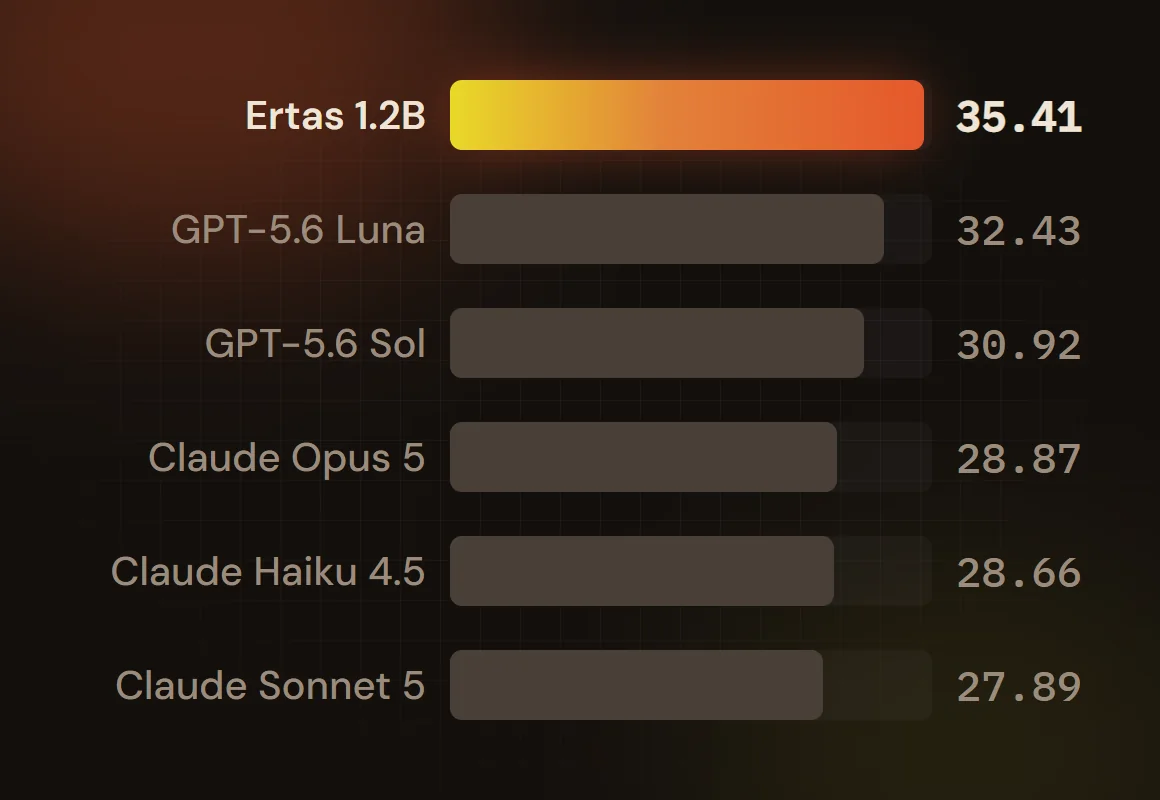
Agent pipelines run the same defined tasks thousands of times a day. Give each step a small model trained for that task, and it delivers frontier-level results at a fraction of the running cost.
Read the paper35.41 vs 32.43
On a summarization benchmark (QMSum), our trained 1.2B summarizer against the best of five hosted proprietary models, Claude Opus 5 and GPT-5.6 among them, on ROUGE-1. A 406M model we trained scored 36.33. Both are over 1,000 times smaller than a frontier model and run on your own hardware, with no per-token fees.
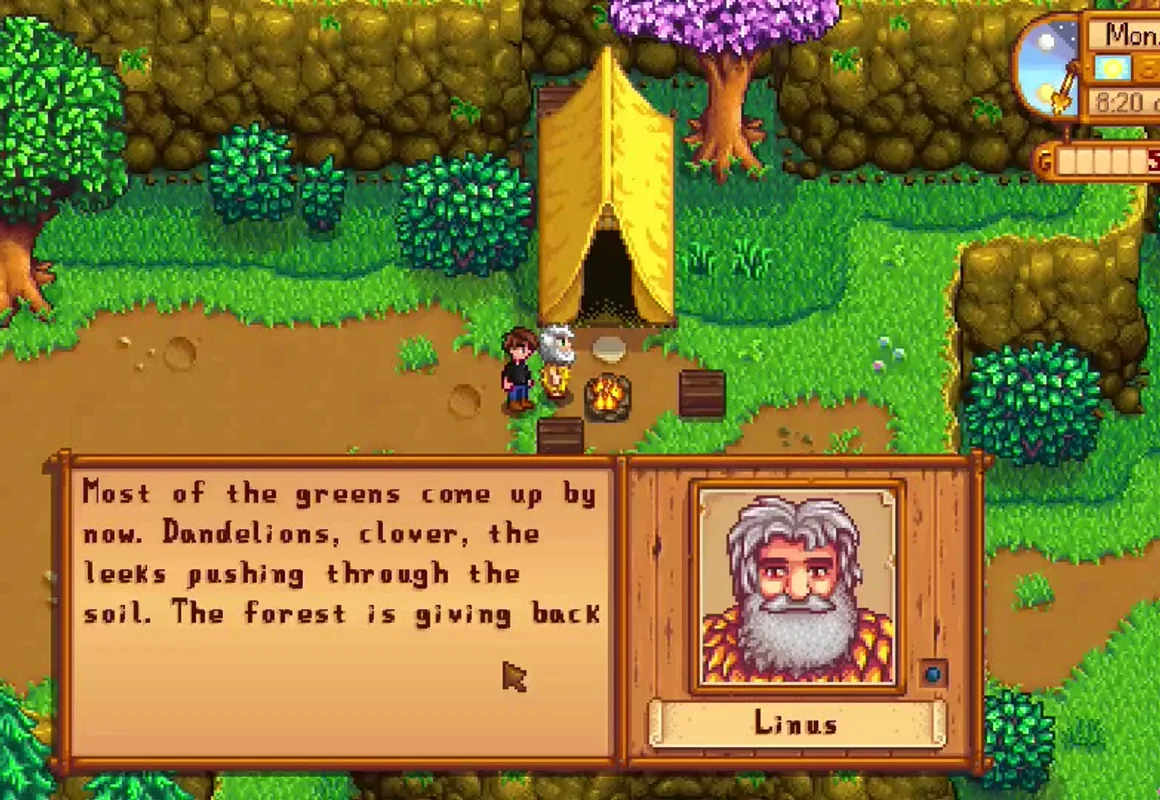
Chatty Valley gives a Stardew Valley villager open conversation that stays in character. One small base model runs on the player's own machine, and each character is a lightweight adapter on top of it.
Read the build story21 MB
holds Linus's whole personality, as an adapter on a shared 1.2B base model that runs locally.
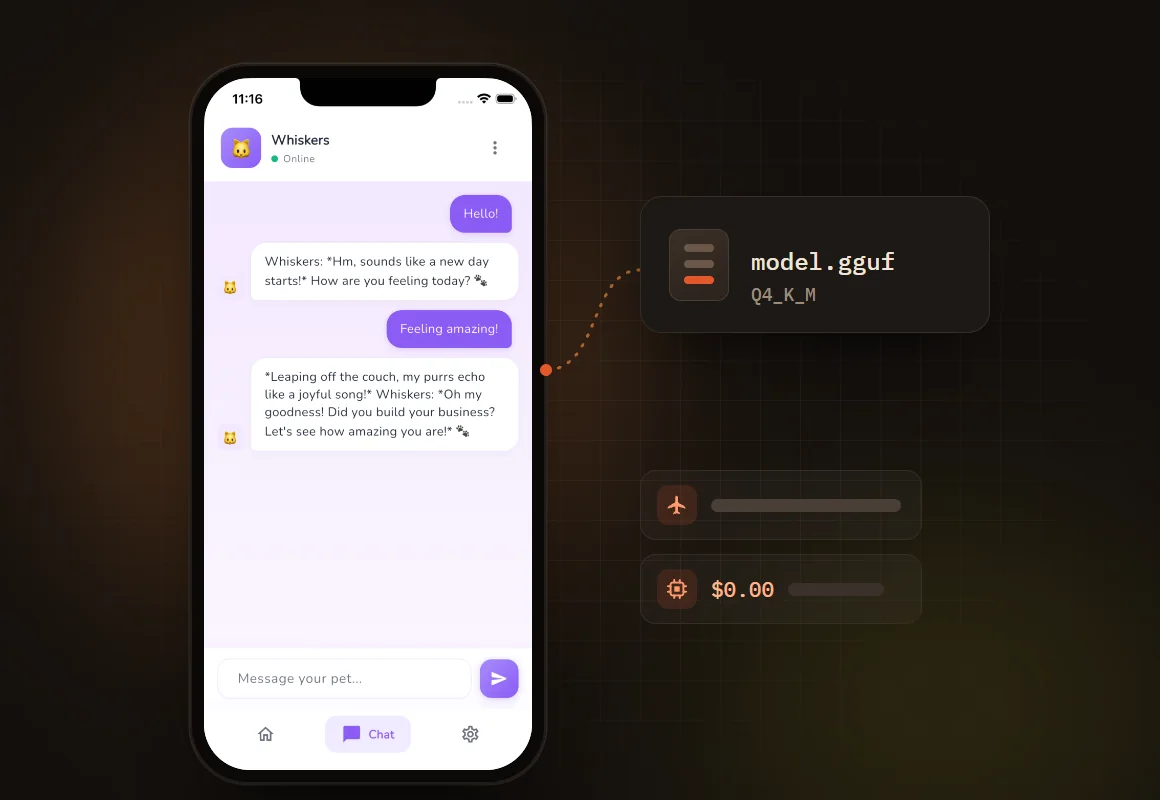
Ship a model trained for your feature inside your iOS, Android or desktop app, working offline with user data kept on the device. Using an off-the-shelf API model today? The adaptive model endpoint can serve your trained model for you.
Adaptive endpointSee the on-device cost math$0
per inference, with the model running on the user's device.
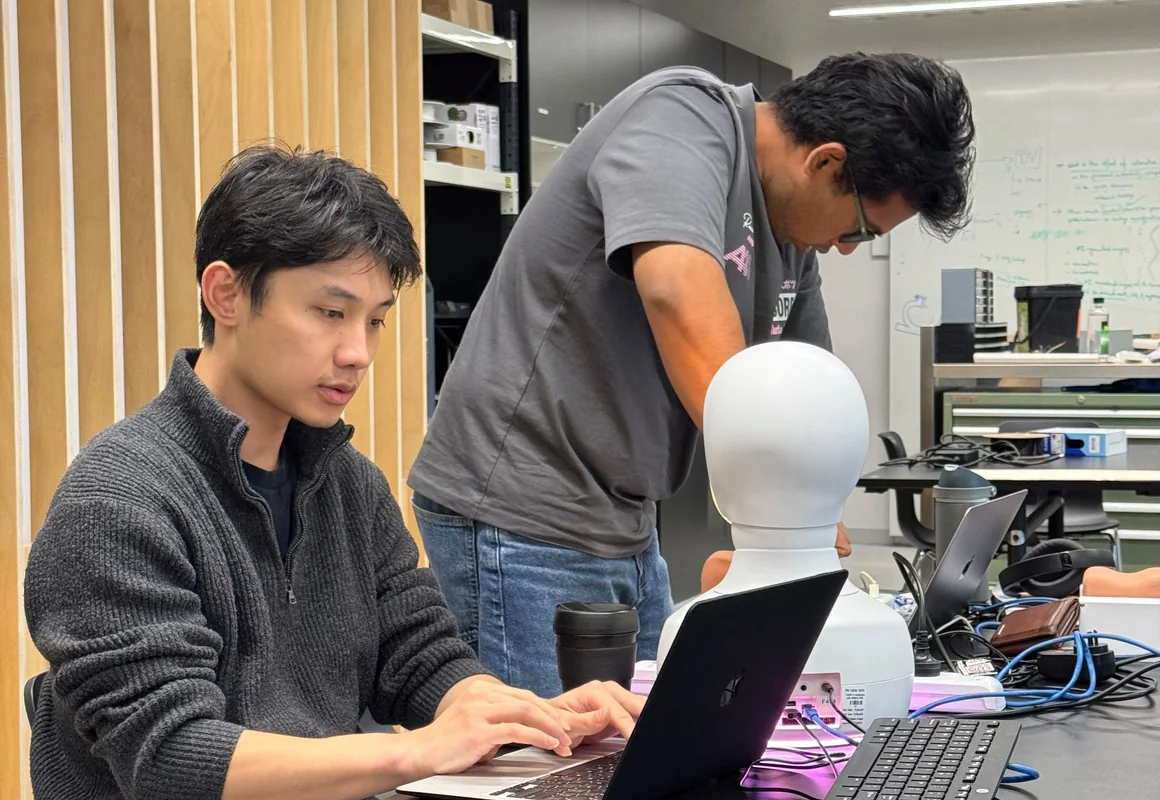
An AI patient for physiotherapy education. Students examine a physical simulator and ask questions out loud, and a small model trained on Ertas answers as the patient, consistent from one question to the next, on the simulator's own hardware.
Sept 2026
shown live at Melbourne Connect Innovation Week. Full case study coming soon.
01 / 04
Specialist agents
Agent pipelines run the same defined tasks thousands of times a day. Give each step a small model trained for that task, and it delivers frontier-level results at a fraction of the running cost.
35.41 vs 32.43
On a summarization benchmark (QMSum), our trained 1.2B summarizer against the best of five hosted proprietary models, Claude Opus 5 and GPT-5.6 among them, on ROUGE-1. A 406M model we trained scored 36.33. Both are over 1,000 times smaller than a frontier model and run on your own hardware, with no per-token fees.
Read the paperSpecialist agents
Agent pipelines run the same defined tasks thousands of times a day. Give each step a small model trained for that task, and it delivers frontier-level results at a fraction of the running cost.
Read the paper35.41 vs 32.43
On a summarization benchmark (QMSum), our trained 1.2B summarizer against the best of five hosted proprietary models, Claude Opus 5 and GPT-5.6 among them, on ROUGE-1. A 406M model we trained scored 36.33. Both are over 1,000 times smaller than a frontier model and run on your own hardware, with no per-token fees.
Game development
Chatty Valley gives a Stardew Valley villager open conversation that stays in character. One small base model runs on the player's own machine, and each character is a lightweight adapter on top of it.
Read the build story21 MB
holds Linus's whole personality, as an adapter on a shared 1.2B base model that runs locally.
App development
Ship a model trained for your feature inside your iOS, Android or desktop app, working offline with user data kept on the device. Using an off-the-shelf API model today? The adaptive model endpoint can serve your trained model for you.
Adaptive endpointSee the on-device cost math$0
per inference, with the model running on the user's device.
Professional training
An AI patient for physiotherapy education. Students examine a physical simulator and ask questions out loud, and a small model trained on Ertas answers as the patient, consistent from one question to the next, on the simulator's own hardware.
Sept 2026
shown live at Melbourne Connect Innovation Week. Full case study coming soon.
Frontier-level results, on your terms
99%
lower cost than Claude Opus 5
and 96% lower than GPT-5.6 Luna
+18%
better after training
ROUGE-1, same model before and after
23×
faster than Claude Opus 5
and 6× faster than GPT-5.6 Luna
Measured in our study on a summarization benchmark (QMSum). Read the paper
A fraction of the running cost.
Once usage passes the crossover, owning the model costs less than paying per token.
- Frontier API
- Custom model on cloud
- Custom model on-device
- Your savings
Illustrative. The crossover depends on your task and hosting.
Full control.
Runs where you deploy it.
On-device, your cloud or on-premise.
Pinned to the version you tested.
Changes only when you retrain.
Behavior set by your examples.
Tone, format and refusals come from your data.
Your data stays private.
The model is yours to download.
How it works
Train your AI model. Visually.

Upload your dataset
Upload your own JSONL, or import one from Hugging Face with a URL. No dataset yet? Build one from scratch in Data Craft, our guided dataset builder.
Fine-tune in Studio
Fine-tune several models in parallel on fast cloud GPUs, no expensive hardware needed. The visual canvas is where you iterate: compare runs, adjust your recipe, and decide what works for your product.
Deploy where your product runs
Export your fine-tuned model as GGUF and run it on-device or locally with llama.cpp, Ollama, or LM Studio. Deploy to your own managed cloud today, with one-click deployment on Ertas coming soon.
Inside the platform
Everything you need to fine-tune and ship custom AI.
Model Studio
Fine-tune popular open-source models on fast cloud GPUs. Supports Gemma 4, Llama 3.2, Qwen 3.5, and more. Visual canvas, no code required.
See supported models →
Why own your model?
- 01
Knows your domain.
Trained on your data, for your task.
- 02
Runs where you need it.
On-device and offline. User data stays on the device.
- 03
No ML team needed.
Ertas runs the training pipeline.
Built for how you work
Start free. Scale as you grow.
Free
Try it out, 30 credits/mo
- 5 daily-refreshed credits/day (up to 30/mo)
- Models under 5B
- Bigger jobs and bigger models need a paid plan
- 5 GB model storage
- 250 MB dataset storage
- Manual testing sandbox
Lite
For builders who have outgrown Free
- 40 credits/mo
- Up to 14B models
- 25 GB model storage
- 1 GB dataset storage
- Higher tier GPUs
- 1-month credit rollover
- Full model export (safetensors)
Builder
For indie devs and solo builders
- 100 credits/mo
- Up to 14B models
- 50 GB model storage
- 2 GB dataset storage
- Higher tier GPUs
- 1-month credit rollover
- Full model export (safetensors)
Pro
For power users and teams managing client work
- 200 credits/mo
- 100 GB model storage
- 5 GB dataset storage
- Priority GPU queue
- Preview access to new features
- Full model export (safetensors)
Business
For scaled teams and multi-client agencies
- 400 credits/mo
- 200 GB model storage
- 10 GB dataset storage
- Higher priority GPU queue
- Priority preview access to new features
- Full model export (safetensors)
Need compliance, on-prem, or frontier hardware? Talk to us about Enterprise
Frequently asked questions
Common questions about training and shipping custom models with Ertas.
No. Ertas handles the training workflow, GPU setup, model packaging, and export path. You still bring the product judgment: the task, the data, and what 'good' looks like for your app.
No. On-device deployment is one strong use case because it gives you offline support, privacy, and zero per-token inference cost. You can also train models for server-side inference, managed GPU deployment, internal tools, support bots, agents, and product workflows.
You get a fine-tuned model artifact that you can test, export, and integrate into your app. For local or on-device deployment, Ertas supports GGUF export. For teams that want hosted inference, Ertas can serve the model for you through the adaptive model endpoint, and one-click deployment from Studio is on the roadmap.
Ertas supports popular open models including Gemma, Qwen, Llama, Mistral, and Phi. We focus on models that builders can actually ship, from small models for local and on-device use to larger models for server-side or GPU deployment. Some additional model families may work experimentally, but official support starts with the models listed above.
Ertas stores your datasets so you can rerun experiments, compare training runs, and avoid uploading the same files again. You stay in control of what you upload and can delete datasets you no longer need from Data Craft. Teams with stricter data requirements can talk to us about an enterprise setup.
Model Studio is the core product today: upload data, train models on cloud GPUs, test results, and export models for your app. Hub lets you manage your fine-tuned models in one place, with public discovery and sharing coming next. Teams that don't want to run their own hosting can have Ertas serve their model through the adaptive model endpoint today, and one-click deployment from Studio is on the roadmap.
Yes. The free plan starts immediately and does not require a credit card. You get monthly credits to train and test smaller models. Paid plans add more credits, larger model support, more storage, and higher priority access to GPUs.
Start building today.Train your first model free.
No card required.
Want a model built and run for your company? See the adaptive endpoint